
Repair or Replace an Old Air Conditioner in Madrid: When It's Worth It
An AC unit over 10 years old may still work, but repairs get expensive and energy bills soar. We help you decide with real criteria, not sales pressure.
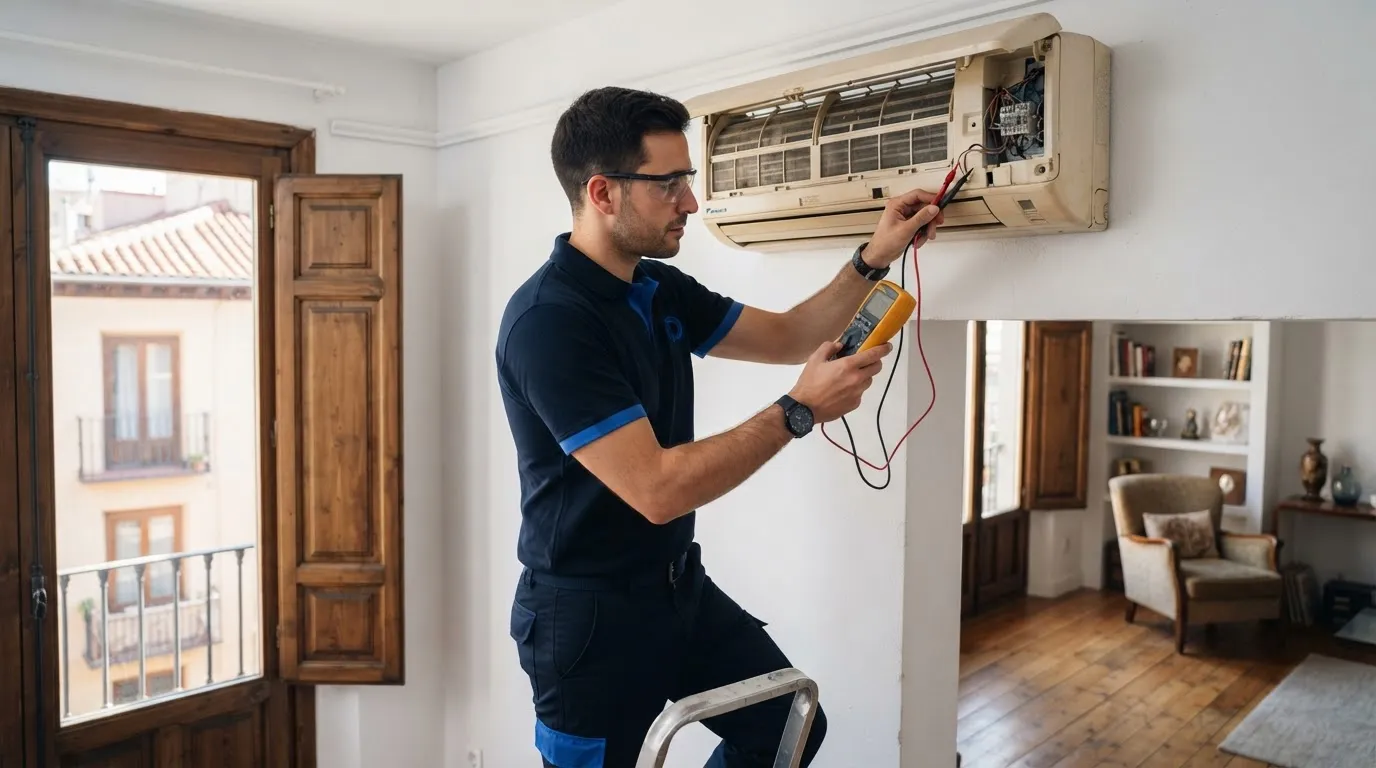
The question isn't new, but in Madrid it carries special weight. Summers are increasingly extreme —with heatwaves exceeding 40°C— and winters in the capital can be surprisingly cold. An old air conditioner that barely works leaves you at a crossroads: do you invest in an expensive repair, or is it better to replace it with a modern, high-efficiency unit? The answer depends on technical, economic, and regulatory factors worth understanding before deciding.
Equipment Age: The First Criterion
Age is the most determining factor. A wall-mounted split has an estimated lifespan of 10 to 15 years; ducted systems, between 12 and 20 years, provided maintenance has been correct. After 10 years, the risk of recurring breakdowns multiplies and parts availability begins to shrink. If your unit is under 8 years old and the fault is specific (a capacitor, a sensor, a filter), repair is almost always worthwhile. If it's over 12 years and the repair exceeds 40% of a new unit's cost, the balance tips toward replacement.
When Repair Makes Sense
- Unit under 8 years old with a specific component failure (board, capacitor, sensor, fan).
- Repair cost under 30-40% of an equivalent new unit's price.
- Parts availability confirmed by the manufacturer or distributor.
- Up-to-date maintenance: if the unit has had annual service visits, its general condition supports the repair.
- External cause breakdown: a power surge, electrical cut, or accidental damage — not general wear.
When Replacement Makes Sense
- Unit over 12 years old with recurring breakdowns (more than two in the past year).
- Repair exceeding 40% of a new unit's cost.
- Obsolete refrigerant gas: if your unit uses R-22 (recharge banned since 2015) or R-410A (being phased out), a major leak can make repair unviable.
- Disproportionate consumption: modern Inverter units consume up to 40% less than old On/Off models. If your electricity bill has risen without changing your habits, the old unit may be the culprit.
- No spare parts: if the manufacturer has discontinued the model and parts are unavailable or take weeks, repair loses viability.
The Refrigerant Gas Factor
This is one of the most important and least-known technical criteria for homeowners. The European F-Gas Regulation has progressively phased out high-GWP (Global Warming Potential) refrigerants. If your unit uses R-22, you can no longer legally recharge it: a leak means the end of its useful life. If it uses R-410A, recharges are still possible but the price rises year after year due to restrictions. Modern units use R-32, a gas with three times lower GWP and higher energy efficiency. A breakdown requiring a gas recharge in a unit over 10 years old with R-410A is, in many cases, the natural moment to consider replacement.
| Situation | Recommendation |
|---|---|
| Unit < 8 years, specific fault | Repair |
| Unit 8-12 years, repair < 40% of new | Repair if parts available |
| Unit > 12 years, recurring breakdowns | Replace |
| R-22 gas with leak | Replace (recharge not permitted) |
| Repair > 40% of new unit cost | Replace |
| High electricity bill + unit > 10 years | Replace with Inverter R-32 |
Unsure whether to repair or replace your AC in Madrid?
A scheduled diagnostic visit (€60 + VAT) lets us assess the unit's real condition, parts viability, and energy consumption. Immediate or emergency attendance costs €120 + VAT. We give you an honest assessment, with no sales pressure.
WhatsApp: Honest diagnosisThe Real Economic Calculation
To decide with data, compare the total cost of each option over 3-5 years. Repair has a known immediate cost, but may generate more breakdowns and high energy consumption. Replacement has a higher initial cost, but reduces consumption (up to 40% with Inverter technology), eliminates the risk of recurring breakdowns, and typically includes a 3-5 year manufacturer warranty. In Madrid homes where AC is used for both cooling and heating (heat pump systems), the energy savings of a modern unit can pay back the investment in 4-6 years.
What About Protected Buildings?
In neighborhoods like Chamberí, Salamanca, or Madrid's historic center, many buildings are listed. Replacing the outdoor unit may require authorization from the community of owners and, in some cases, from the City Council. If you live in a protected building, it's worth checking before deciding. A repair may be the more agile option if authorization will take months.
Frequently Asked Questions
How much does a typical repair cost versus a new unit?
An average repair (parts + labor) ranges from €120 to €350. A new mid-range wall split, installed, starts at around €700-900. If the repair exceeds €300 and the unit is over 10 years old, replacement is usually more profitable in the medium term.
Do new units really consume much less?
Inverter technology adjusts compressor power to real demand, avoiding the on/off cycles of old units. Combined with R-32 gas, a modern unit can consume up to 40% less than a 12-year-old On/Off model.
If I have R-410A, do I have to replace the unit no matter what?
Not necessarily. R-410A recharges are still legal, though the price rises due to F-Gas Regulation restrictions. The problem arises if the leak is recurring or the unit is old: in that case, the cost of successive recharges makes maintaining the unit unviable.
Do you serve Toledo?
Yes, we cover Toledo with travel from Madrid, with no travel surcharge. Contact us to check availability.
Related Articles
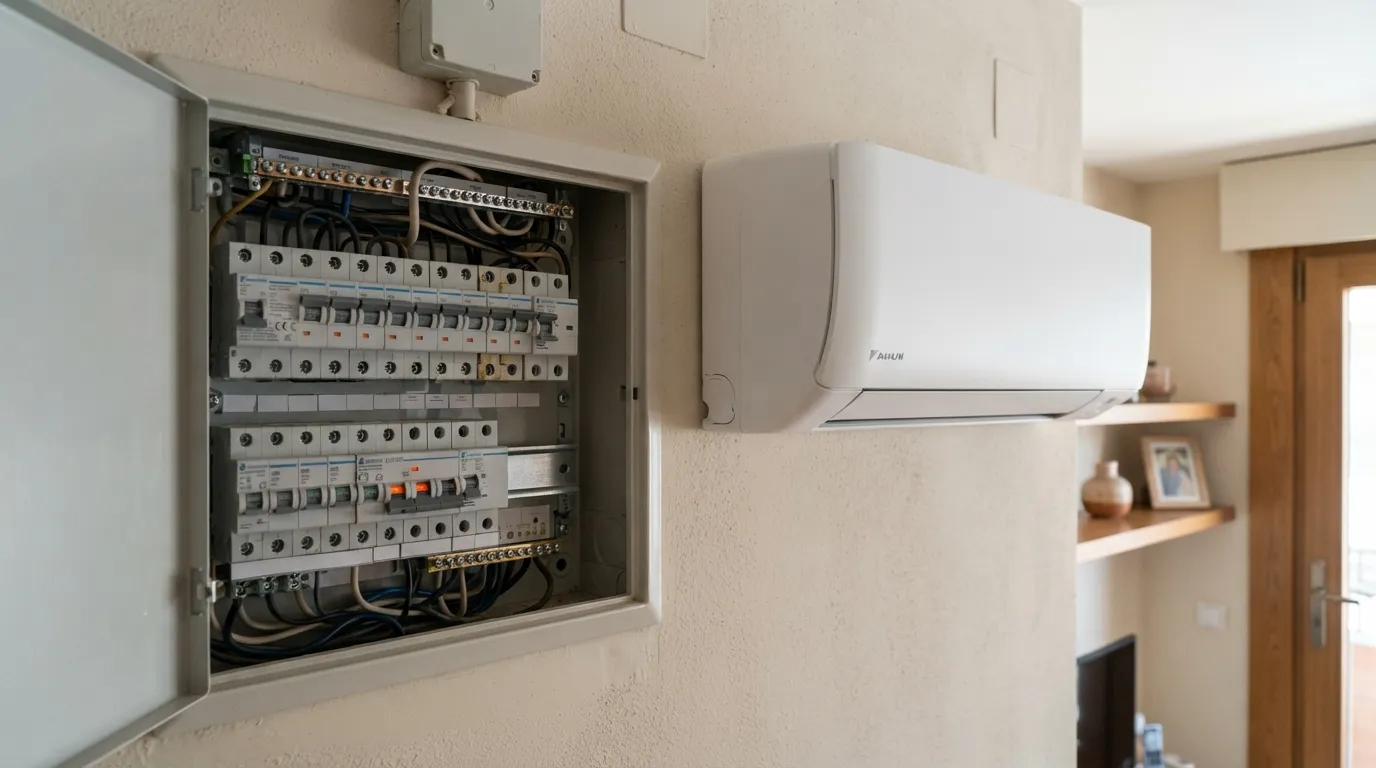
Why Your Air Conditioning Trips the Circuit Breaker in Madrid
Discover the most common reasons why your air conditioning cuts off the power and what steps you should take to fix the fault.

Why is My AC Leaking Water?
Water leaks are the most common summer breakdown. Learn the causes and how to fix it quickly.

AC Not Cooling? Here are the Most Common Causes
Find out why your AC is blowing room-temperature air, the main culprits behind this breakdown, and what to do about it.